
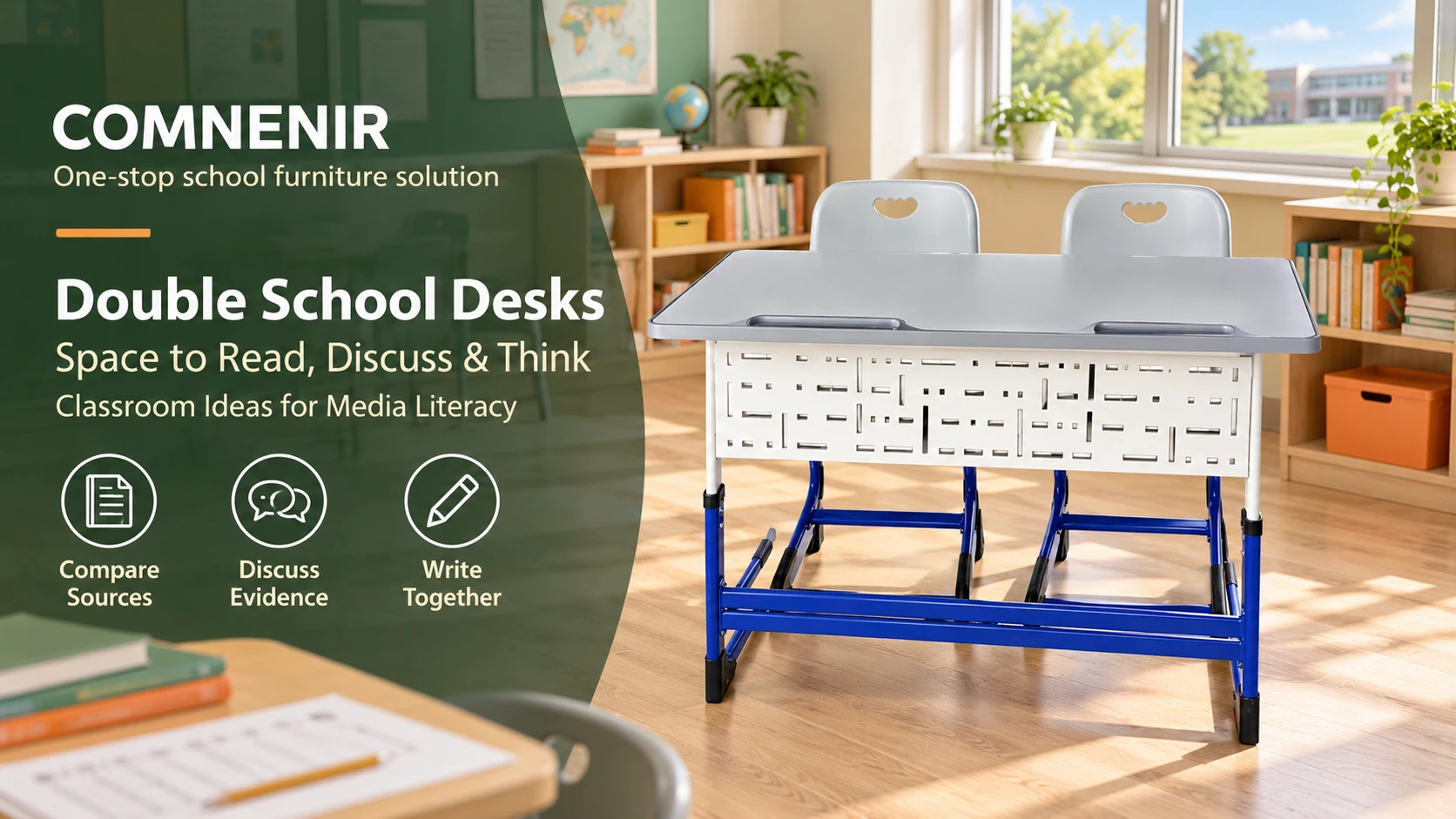
Two students compare different headlines about the same event. They underline the evidence, question the wording and write a short explanation together. The activity may involve a printed article, a teacher-selected website or an example of AI-generated text. In every case, it needs a practical place to read, talk and work.
That classroom scene connects with a current education debate. On October 9, 2026, UNESCO called for school screen regulation in Mexico to be accompanied by digital literacy, monitoring and evaluation. Its discussion also highlighted reading, writing, reasoning and collaborative work as important parts of education. [Read UNESCO’s announcement](https://www.unesco.org/en/articles/unesco-calls-pairing-school-screen-regulation-mexico-digital-literacy-and-continuous-monitoring)
For schools planning their learning spaces, this raises a useful question: how can classroom furniture accommodate both individual thinking and purposeful collaboration?
Double school desks offer a shared surface for two learners. Their suitability depends on student fit, available workspace and the way teachers organize activities. Here are practical ways to consider them for media literacy lessons and everyday classroom use.
## Make Room for Comparing Sources
Media literacy activities often ask students to look at more than one source. A pair might compare two reports, identify who published them and separate supported claims from unanswered questions.
A shared desk can hold both sources alongside a worksheet, allowing students to point to the same material during discussion. Before choosing a model, test its usable surface with the materials students actually need. Two open exercise books, printed articles and a shared device can occupy more room than a product photograph suggests.
Allow each learner enough personal writing space while keeping shared resources within comfortable reach.
## Give Pair Work a Clear Structure
Sitting together creates an opportunity for collaboration; the lesson structure determines how that opportunity is used.
For a source-checking activity, one student could identify the author, publication date and supporting evidence while the other records questions or missing information. They can then exchange roles and agree on a short written conclusion.
This is an example teachers can adapt to their learners, rather than a learning outcome guaranteed by a desk design. The furniture’s role is to provide a suitable workspace for the activity.
## Keep Individual Thinking in the Lesson
Shared desks also need to accommodate independent tasks. Students may first read silently, write their own response and then discuss their reasoning with a partner.
When reviewing a sample, check whether both learners can write at the same time without competing for elbow room. Confirm desk height, chair height and clearance for the intended student group. Where height adjustment is offered, request the actual adjustment range and instructions.
The blue-and-white COMNENIR set pictured here features a grey shared desktop, two pencil grooves, a white front panel with rectangular cutouts and two matching chairs. Final dimensions, materials and configuration should be confirmed for the selected model.
## Plan the Room Around the Activity
Pair work still requires clear sightlines and teacher access. Students need to see a demonstration, listen to instructions and move safely between activities.
Use the furniture’s actual dimensions when drawing the classroom layout. Include occupied chairs, entrances, storage and circulation routes. Check that teachers can reach students to review their work without requiring others to move repeatedly.
Include accessible seating arrangements and any individual support requirements in the plan. A consistent classroom appearance should allow for different learner needs.
## Decide How Devices Will Be Used
A media literacy lesson can combine paper resources with carefully selected digital activities. Schools should decide where devices will be stored, when they will be used and how charging will be managed.
If students share a tablet or laptop, assess viewing position and remaining writing space during a sample lesson. Where powered equipment is required, plan suitable electrical provision and cable routes separately; an ordinary classroom desk should not be assumed to include charging or cable-management features.
## Prepare a Classroom Furniture Inquiry That Reflects Real Use
For school buyers, distributors and project contractors, a useful inquiry describes the intended classroom as well as the product quantity.
Share the student age range, required dimensions, number of learners, room layout and typical learning materials. Specify whether one set must include one double desk and two chairs, and identify any required testing documents, spare parts or delivery arrangements.
COMNENIR — One-stop school furniture solution — is a China-based school furniture manufacturer with a monthly production capacity of 20,000 sets. Send your classroom requirements, quantities and destination to request a suitable product proposal and quotation.
From comparing headlines to discussing evidence and writing together, everyday learning needs usable space. Selecting double school desks around those activities gives schools a practical basis for planning their next classroom furniture project.
 Русский
 English