
Choosing classroom furniture may seem simple, but for school administrators, government agencies, NGOs, and education contractors, selecting the right desks and chairs can significantly impact student comfort, classroom efficiency, and long-term project value.
Before purchasing school furniture, here are ten important factors every school should consider.
## 1. Durability
School furniture is expected to withstand daily use for many years.
When evaluating desks and chairs, consider:
* Steel frame thickness
* Welding quality
* Load-bearing capacity
* Surface finishing
Durable furniture reduces replacement costs and provides better long-term value.
## 2. Student Comfort
Students spend several hours each day sitting in classrooms.
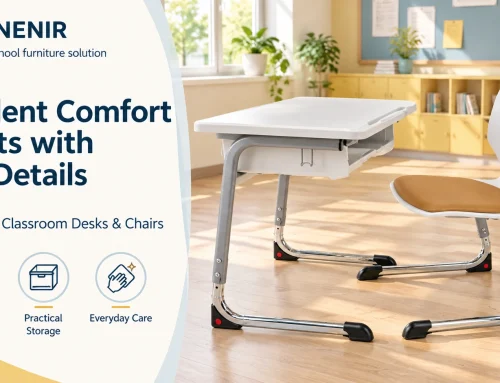
Ergonomically designed desks and chairs help maintain proper posture, reduce fatigue, and improve concentration during lessons.
## 3. Safety
Student safety should always be a top priority.
Look for furniture with:
* Rounded corners
* Stable structures
* Anti-pinch designs
* Environmentally friendly materials
A safe learning environment supports better educational outcomes.
## 4. Age Appropriateness
Furniture should match the age and height of students.
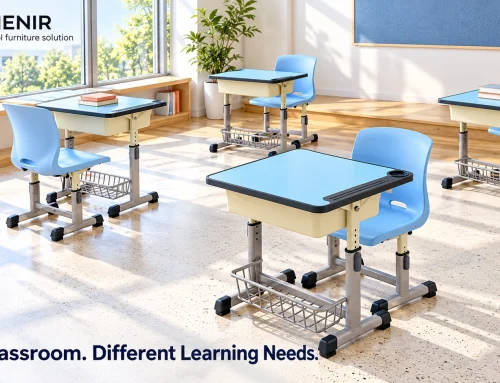
Adjustable desks and chairs can accommodate different age groups and extend the useful life of classroom furniture.
## 5. Ease of Maintenance
Classroom furniture is used every day.
Materials that are easy to clean, scratch-resistant, and stain-resistant help schools reduce maintenance costs and keep classrooms looking professional.
## 6. Storage Features
Modern classroom furniture often includes:
* Book storage compartments
* Bag hooks
* Under-desk storage racks
These features help students organize their learning materials and maintain a tidy classroom environment.
## 7. Classroom Layout Requirements
Different teaching methods require different furniture arrangements.
Schools should consider:
* Single desks
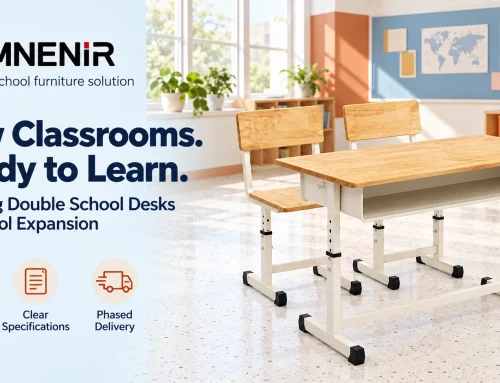
* Double desks
* Collaborative learning tables
* Flexible classroom layouts
The right furniture can improve classroom efficiency and maximize available space.
## 8. Climate Suitability
For projects in Africa, the Middle East, and coastal regions, climate conditions are important.
Furniture should be resistant to:
* Rust
* Humidity
* High temperatures
This ensures long-term durability in challenging environments.
## 9. Supplier Experience
An experienced supplier offers more than products.
They can support:
* Project planning
* Export packaging
* International shipping
* Installation guidance
Reliable suppliers help ensure successful project execution.
## 10. Total Cost of Ownership
The lowest purchase price does not always provide the best value.
Schools should evaluate:
* Product lifespan
* Maintenance costs
* Shipping expenses
* Replacement frequency
A higher-quality product often results in lower overall costs over time.
## Conclusion
Classroom furniture plays an important role in creating safe, comfortable, and effective learning environments.
When selecting desks and chairs, schools should consider durability, safety, ergonomics, climate suitability, and supplier experience—not just price.
At Comnenir School Furniture, we provide complete school solutions including classroom furniture, library furniture, laboratory furniture, STEM classrooms, and smart learning environments for schools worldwide.
The right classroom furniture is an investment in students, education, and the future.
 Русский
 English