
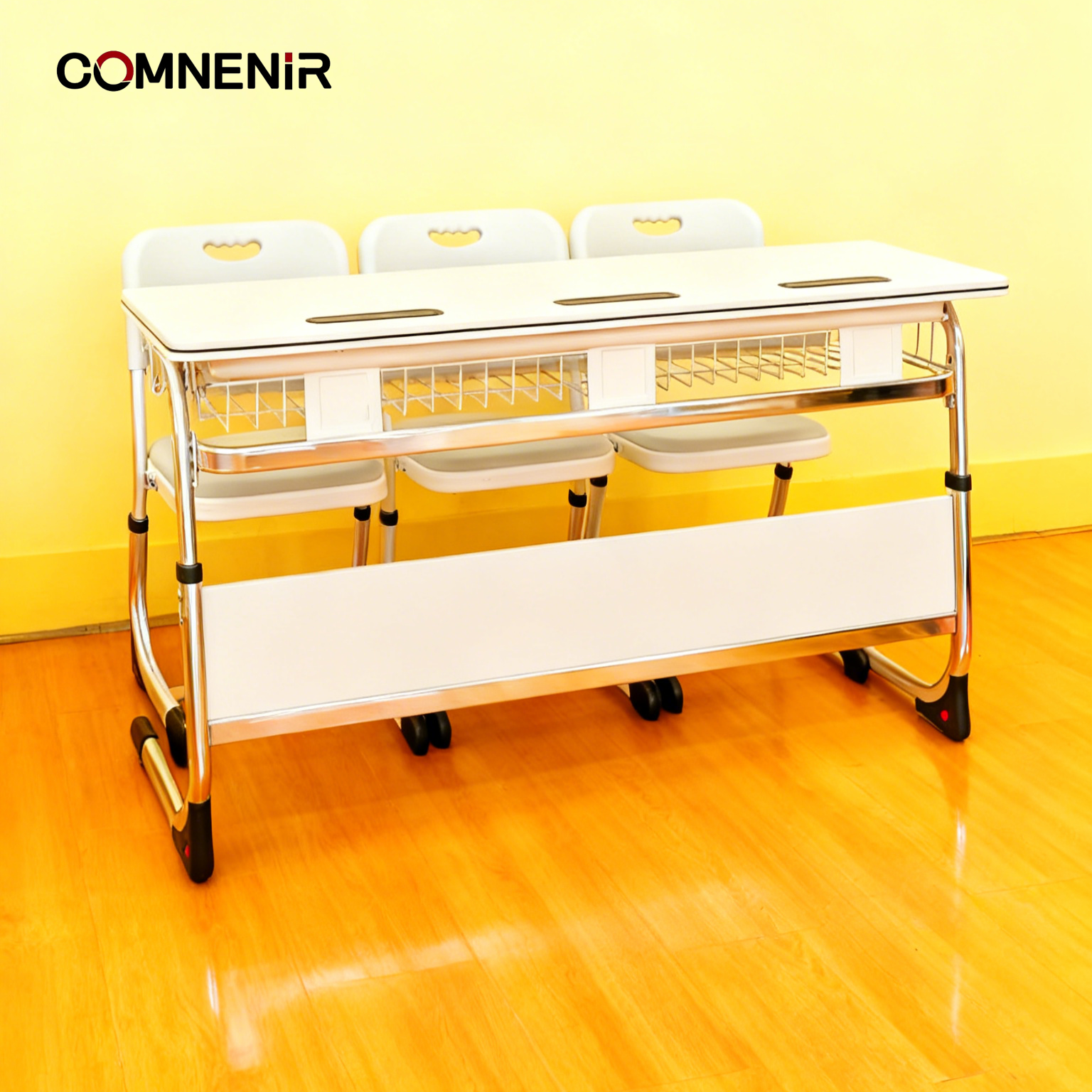
As global education modernization accelerates, student health and learning experience are becoming top priorities in school procurement. In 2025, the school furniture industry is experiencing two major shifts:
**Ergonomic design** and **eco-friendly materials**.
In the past, desks and chairs were viewed simply as durable products. But today, schools and parents are asking deeper questions:
🔹 Are students sitting comfortably?
🔹 Does the furniture improve focus and posture?
🔹 Are the materials safe and free from harmful emissions?
🔹 Will the product affect indoor air quality?
Studies show that improper desk height or poor seating posture can lead to spinal issues, discomfort, and lower concentration. Meanwhile, low-grade materials may release harmful substances that threaten children’s long-term health.
As a result, future-ready school furniture is moving rapidly toward higher standards:
* **Multiple height options** for different age groups and body sizes
* **E1/E0 environmental standards** for lower emissions and safer classrooms
* **Rounded-edge safety** to prevent injuries
* **More durable steel structures** for longer lifespan
* **Ergonomic back support** to reduce fatigue and improve comfort
The Chinese manufacturer **Comnenir** has invested heavily in ergonomic and environmental upgrades and is increasingly recognized by schools worldwide.
“Furniture is not just equipment — it’s the closest learning partner for every student.”
Comnenir will continue advancing ergonomic and eco-friendly standards to help schools build safer, healthier, and more effective learning environments.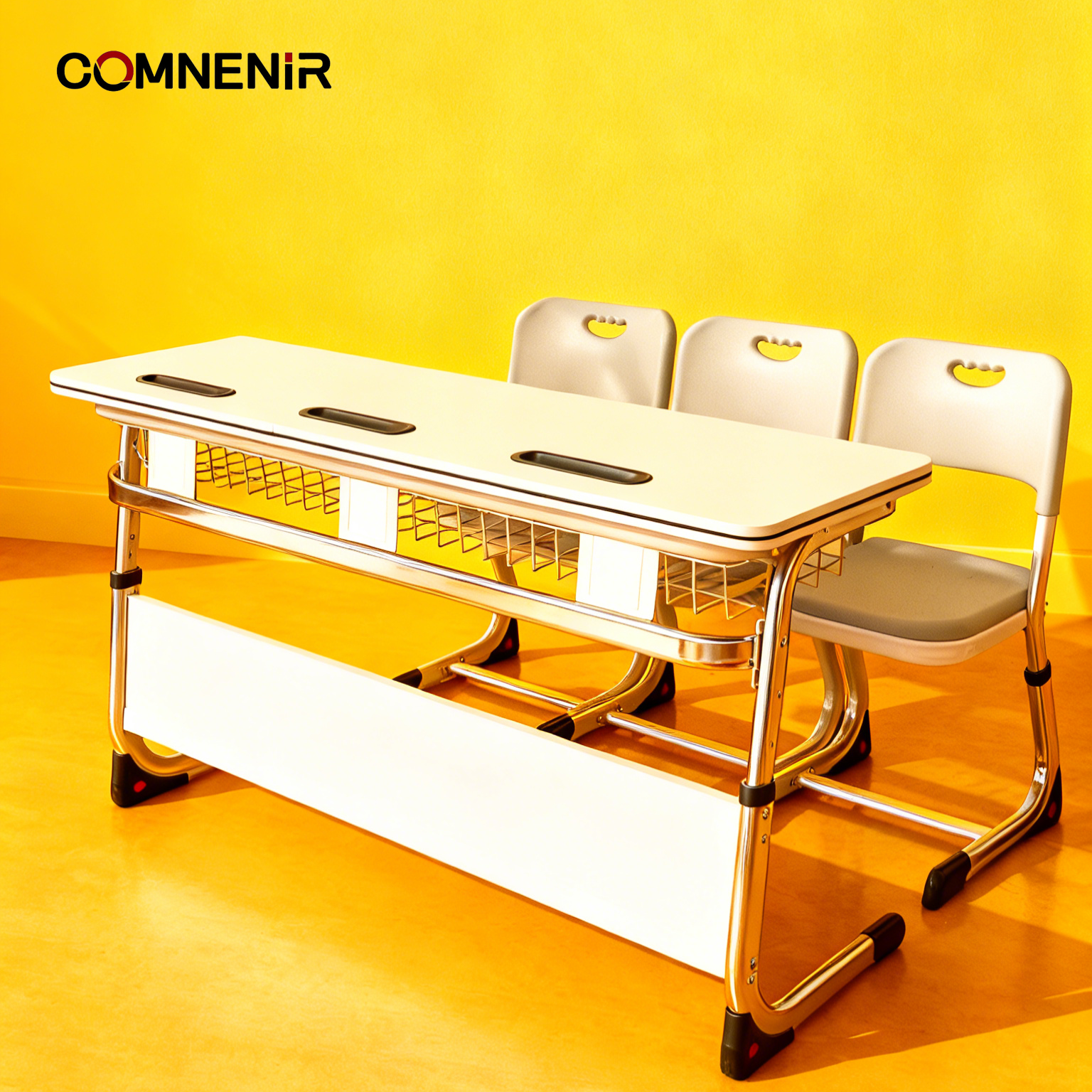


 English
 Russian